

Continuous Belt Screen
“Searching for uninterrupted filtration in high-volume plastic extrusion? As a specialized industrial wire mesh facility, we engineer heavy-duty continuous belt screens specifically for polymer processing. Woven from premium high-tensile stainless steel (SUS 304/316L) utilizing a robust reverse dutch weave, our filter mesh ensures seamless compatibility with any continuous belt screen changer. Our belts guarantee zero-bypass melt filtration, exceptional mechanical pull strength, and precise micron ratings. Whether you require standard rolls or custom-slit bands for your specific extrusion lines, contact our engineering team for a factory-direct wholesale quote.”
What Is Continuous Belt Screen?
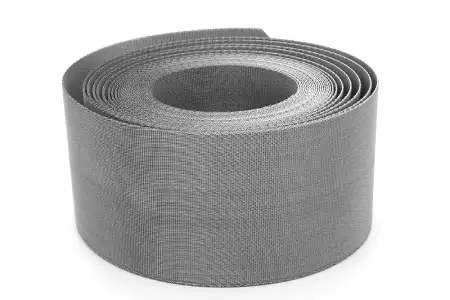
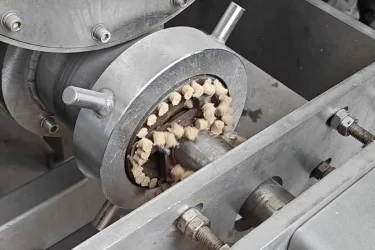
The continuous belt screen for the extruder is an advanced automatic filtration part designed to remove contaminants from molten plastic during extrusion. It is also called a stainless steel wire mesh belt. This continuous belt screen can help to ensure uninterrupted operation by automatically advancing the mesh belt. It is good for providing clean filtration without stopping the extrusion process. It is really a good item in plastic extrusion processing.
This extruder belt screen filtration system is good to improve product quality, protect extrusion equipment, and increase production efficiency in plastic extrusion processing and recycling applications.
It is widely used in Industrial Filtration, Food Processing Industry, Water Treatment, Screening and Sieving, and Protective and Architectural Applications.
Why Choose Reverse Dutch Weave
The secret behind a truly “continuous” filter belt lies entirely in its tensile strength. Standard wire mesh snaps or deforms under the extreme mechanical pulling forces of automatic screen changers. That is exactly why our continuous belt screens are engineered exclusively utilizing a heavy-duty Reverse Dutch Weave. This specialized architectural structure transfers longitudinal stress seamlessly, guaranteeing zero belt-snapping during high-pressure polymer extrusion. Here is why it remains the undisputed industry standard:
- Superior Tensile Strength: Engineered with high-density warp wires to withstand the extreme mechanical pulling forces of continuous automatic screen changers without tearing, stretching, or necking down.
- Uninterrupted Extrusion: Allows for seamless screen advancement in polymer melt filtration, completely eliminating the need to halt production lines for manual filter replacements.
High Dirt-Holding Capacity: The unique reverse weave structure provides precise micron retention while handling heavily contaminated recycled plastics, ensuring a consistent and pure melt flow.
Functions of Continuous Belt Screen?
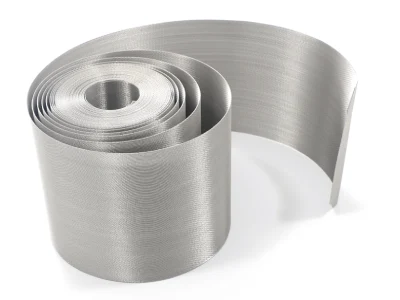
- Continuous Operation – The continuous belt screen for the extruder eliminates production downtime by automatically replacing clogged filtration areas, improving productivity and efficiency. This is the most important thing during the extrusion.
- Improved Product Quality – It can help to safeguard the extruder screw and die head, and finally improve the product quality.
- Reduce Labor Costs – With automatic mesh movement, this stainless steel mesh belt for the extruder can reduce manual screen replacement and labor requirements.
- Higher Production Efficiency – The continuous belt screen for the extruder can maintain stable melt pressure, keep uniform extrusion, and reduce material waste.
- Long Service Life– especially the High-quality stainless steel continuous belt filter can ensure the mold durability.
Our Specification of Continuous Belt Screen
- Material: stainless steel 304, 304L, 316, 316L, etc.
- Type: perforated metal mesh
- Popular belt width: 40–210 mm.
- Stock belt width: 97mm,107mm,120mm,127mm,157mm
- Maximum width is 0.5 m.
- Weave type: reverse dutch weave
- Standard length: 10 m or customized.
- Popular mesh size:
- 48 × 10 mesh for 400 nominal microns.
- 72 × 15 mesh for 250 nominal micron
- 132 × 17 mesh for 170 nominal microns
- 152 × 24 mesh for 160 nominal micron
- 260 × 40 mesh for 55 nominal micron
| Mesh Size (warp/inch × weft/inch) | Wire Diameter (mm) (warp × weft) | Fineness Of Filtering (micron) | Weight (kg/m2) | Width (mm)* | Length (m) |
|---|---|---|---|---|---|
| 48 × 10 | 0.5 × 0.5 | 400 | 3.63 | 40–210 | 10,000 |
| 63 × 18 | 0.4 × 0.6 | 220 | 4.14 | 40–210 | 10,000 |
| 72 × 15 | 0.45 × 0.55 | 250 | 4.78 | 40–210 | 10,000 |
| 100 × 16 | 0.35 × 0.45 | 190 | 3.87 | 40–210 | 10,000 |
| 107 × 20 | 0.24 × 0.60 | 210 | 3.34 | 40–210 | 10,000 |
| 120 × 16 | 0.35 × 0.45 | 180 | 4.49 | 40–210 | 10,000 |
| 132 × 17 | 0.32 × 0.45 | 170 | 4.24 | 40–210 | 10,000 |
| 152 × 24 | 0.27 × 0.4 | 160 | 3.73 | 40–210 | 10,000 |
| 160 × 17 | 0.27 × 0.45 | 160 | 2.02 | 40–210 | 10,000 |
| 170 × 18 | 0.27 ×0.45 | 160 | 4.01 | 40–210 | 10,000 |
| 171 × 46 | 0.15 × 0.30 | 130 | 2.00 | 40–210 | 10,000 |
| 180 × 20 | 0.27 × 0.45 | 170 | 4.29 | 40–210 | 10,000 |
| 200 × 40 | 0.17 × 0.27 | 120 | 2.17 | 40–210 | 10,000 |
| 240 × 40 | 0.15 × 0.25 | 70 | 1.98 | 40–210 | 10,000 |
| 260 × 40 | 0.15 × 0.27 | 55 | 2.19 | 40–210 | 10,000 |
| 290 × 76 | 0.09 × 0.19 | 40 | 1.27 | 40–210 | 10,000 |
| 300 × 40 | 0.15 × 0.25 | 50 | 2.31 | 40–210 | 10,000 |
| 300 × 80 | 0.15 × 0.2 | 35 | 2.49 | 40–210 | 10,000 |
Stainless Steel Material Composition (Chemical Content)
| Material Grade | Chromium (Cr) | Nickel (Ni) | Molybdenum (Mo) | Carbon (C) | Key Advantage |
|---|---|---|---|---|---|
| SS 304 | 18% - 20% | 8% - 10.5% | - | ≤ 0.08% | Universal grade, high cost-performance. |
| SS 304L | 18% - 20% | 8% - 12% | - | ≤ 0.03% | Ideal for welded screen packs. |
| SS 316 | 16% - 18% | 10% - 14% | 2% - 3% | ≤ 0.08% | Superior resistance to corrosion & pitting. |
| SS 316L | 16% - 18% | 10% - 14% | 2% - 3% | ≤ 0.03% | Best for high-temp, acidic extrusion. |
Applications of Continuous Belt Screen for Extruder?
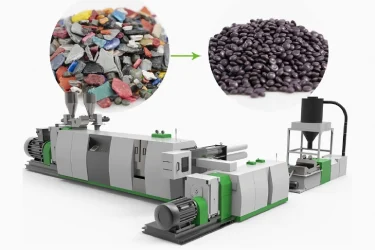
Scenario 1: Post-Consumer Plastic Recycling (PE/PP Pellets)
Engineering Pain Point: Recycled plastics contain high levels of solid contaminants (paper, wood, metal shavings). The screen must handle heavy dirt-loading without blinding, while maintaining enough structural integrity to be pulled through the changer automatically.
Matching Model: 72 × 15 mesh for 250 nominal micron & 132 × 17 mesh for 170 nominal microns
Key Technical Indicators:
Tensile Profile: Features heavily reinforced weft wires (0.45 mm) to handle severe mechanical pulling forces up to 300°C without stretching.
Filtration Design: Optimized 150 – 250 μm rating allows rapid polymer flow while trapping macro-impurities efficiently.
Scenario 2: High-Precision Blown Film & PET Extrusion
Engineering Pain Point: Even a microscopic impurity in the polymer melt can cause “bubble tear” in blown film lines or weaken the structural integrity of PET products, leading to massive material waste.
Matching Model: 260 × 40 mesh for 55 nominal micron
Key Technical Indicators:
Micron Rating: Ultra-precise 50 μm retention blocks micro-gels and degraded polymer specks.
Surface Flatness: Calendered (flattened) weaving process ensures a perfectly smooth screen surface, preventing polymer stagnation and thermal degradation at the screen face.
Scenario 3: Heavy-Duty Color Masterbatch & Compounding
Engineering Pain Point: High concentration of pigments and additives creates extreme melt pressure drops (often exceeding 120 bar). The belt must resist deformation under continuous high-pressure extrusion.
Matching Model: 152 × 24 mesh for 160 nominal micron
Key Technical Indicators:
Material: Premium SUS 316L or 317L for enhanced resistance against aggressive chemical additives and pigment off-gassing.
Weave Density: The dense 152×24 matrix provides a robust structural backbone, ensuring zero bypass even when the pressure differential peaks during auto-screen advancement.


How to Choose the Right Continuous Belt Screen for Extruder?
The right continuous belt screen for the extruder depends on the following factors.
Mesh Size
The suitable mesh size is based on filtration requirements.
Extrusion Capacity
Ensure stainless steel mesh belts for extruders can match the extrusion output.
Material Compatibility
The material should be suitable for the extrusion temperature and polymer type. The most suitable material is a stainless steel mesh filter belt.
Automation Level & Installation Requirements
Ensure proper installation compatibility with the extrusion system. Our multi-layer extruder screen packs are not only designed for high-pressure durability but also align with the global sustainability of stainless steel materials, which can help to ensure a long-lasting and recyclable filtration solution for your production line.
Our Export Shipping & Packing Details
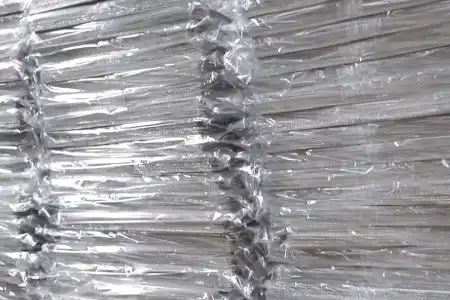
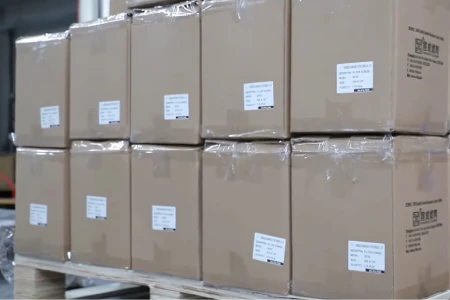
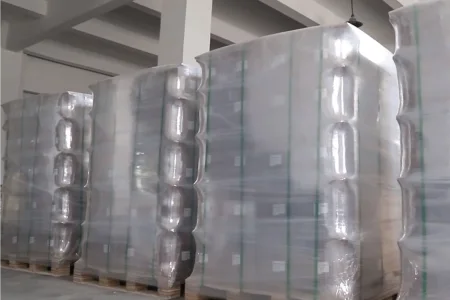
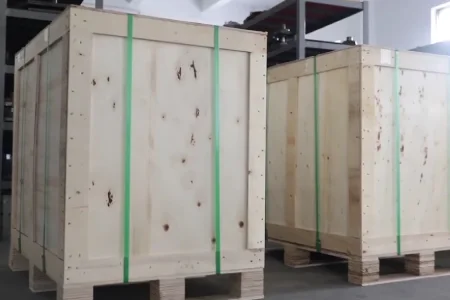
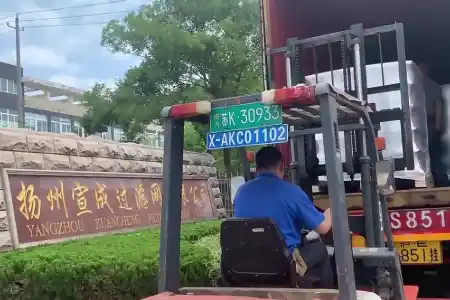
At Xuancheng, we provide professional export packaging, including individual protective bags and reinforced cartons with waterproof film. Our logistics team ensures safe delivery to global markets via sea and air.
FAQ on Continuous Belt Screen
What is a continuous belt screen for extruder?
A continuous belt screen is an automatic filtration system used to remove contaminants from molten plastic during plastic extrusion.
What materials are used?
Typically matetials are stainless steel mesh, polyester mesh or alloy mesh.
How do I choose the right mesh size?
Choosing the correct mesh size depends on your application. A fine mesh circular screen works best for filtering small particles like powders or fine liquids, while a coarse industrial mesh screen is better for larger particles such as sand, grains or aggregates.
What industries use extrusion belt screens?
Plastic recycling, polymer production, packaging, pipe manufacturing and film extrusion industry.
Can it be customized?
Absolutely yes. Mesh size, width and material can be customized.
What are the main materials?
Common materials include stainless steel, copper, brass, nylon, and polyester. Each material is chosen for specific durability, chemical resistance or flexibility.
What Our Global Partners Say
“We’ve been using this Continuous Belt Screen for our high-pressure extrusion lines for several months. The weave consistency is top-notch, and it flows smoothly through the auto-changer without any snagging or tearing. It has significantly improved our production efficiency. —— Production Engineer”
“Our process requires extremely high tensile strength, and these Continuous Belt Screens have exceeded our expectations. It handles heavy contaminants without breaking. Huge thanks to Nicoo’s professional advice on selecting the right weave pattern for our specific recycled plastic grade. Yangzhou Xuancheng is now our primary source for all belt screen needs. —— Operations Director”
Top Continuous Belt Screen Changer Mesh | Factory in China
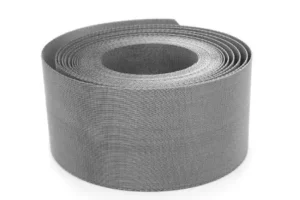
Industrial manufacturer of continuous belt screens. We supply high-tensile stainless steel filter mesh for continuous belt screen changers & extruders.
Product SKU: XC-CBS-SERIES
Product Brand: Yangzhou Xuancheng
Product Currency: USD
Product Price: 8.00
Price Valid Until: 2028/12/31
Product In-Stock: InStock
4.8
What about the Price of Continuous Belt Screen?