
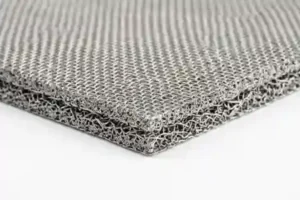

Industrial Extruder Filter Mesh by Layers
Quick Answer: Extruder filter screen layers typically range from single to multi-layer (2-5 layers) configurations. The primary purpose of layering is to balance filtration precision with mechanical strength. It can prevent mesh deformation under high melt pressure while optimizing dirt-holding capacity.
Detailed Layers Guide & Application Scenarios

Single Layer Extruder Filter Discs
Definition: Single-layer discs are precision-cut filter elements made from a single sheet of woven wire mesh (typically SS 304 or 316). They are the simplest form of filtration media, available in various mesh counts to suit specific micron requirements.
Usage & Recommendations: These are best suited for low-pressure extrusion environments or as primary screens in multi-stage filtration. We recommend them for coarse recycling of PE/PP and rubber processing where contaminant levels are high and frequent, and low-cost replacement is necessary. For optimal performance, you need to ensure the disc diameter matches your breaker plate precisely to prevent edge bypass. While economical, they lack the structural support for high-viscosity melts; in such cases, they should be paired with a coarser support mesh.
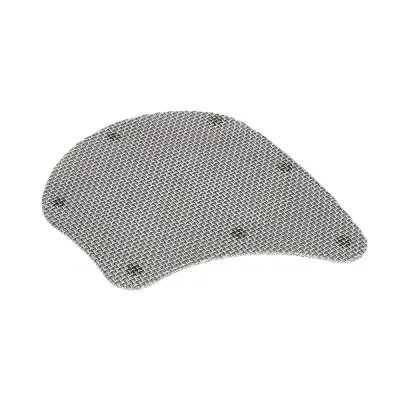
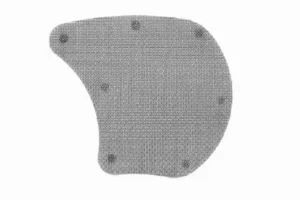
Definition: Spot-welded packs consist of multiple mesh layers (ranging from 2 to 5 layers) joined together at strategic points using precision resistance welding. This configuration usually follows a symmetrical “Coarse-Fine-Coarse” layout to provide both filtration and structural reinforcement.
Usage & Recommendations: This is the most versatile solution for single and twin-screw extruders producing films, profiles, and pellets. The welding prevents individual layers from shifting under melt pressure, which can ensure consistent filtration accuracy. We advise using these for masterbatch production and pipe extrusion. Our technical tip: always place the finest mesh in the center to protect it from mechanical stress, which can extend the pack’s service life by up to 40% compared to non-welded combinations.

- Definition: These are high-performance screen packs where multiple mesh layers are bound together by an external metal rim, typically made of aluminum, copper, or stainless steel. The rim acts as a gasket, providing a rigid, unified edge.
- Usage & Recommendations: Rimmed packs are the “Gold Standard” for automatic and hydraulic screen changers. The metal border ensures a leak-proof seal against the machine walls, preventing “edge leakage,” which often plagues high-pressure lines. We strongly suggest these for sheet extrusion and high-quality cast film production. The rim not only simplifies installation but also prevents individual wires from fraying and entering the polymer stream. If you are experiencing material bypass at the edges of your breaker plate, upgrading to a rimmed pack is the most effective solution.
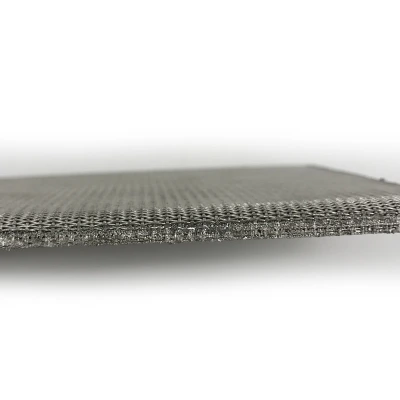
Sintered Multi-Layer Extruder Screens
Definition: Sintered screens represent the pinnacle of filtration technology. Multiple layers of wire mesh are diffusion-bonded through a high-temperature sintering process, fusing every wire contact point into a permanent, monolithic porous structure.
Usage & Recommendations: Sintered mesh is designed for extreme-pressure applications and high-value polymer production, such as BOPP films, chemical fiber spinning, and aerospace components. Its greatest advantage is zero wire migration—a wire can’t break loose and contaminate your product. Although the initial cost is higher, these filters are washable and reusable via ultrasonic cleaning or calcination. We recommend sintered screens for processes requiring ultra-fine filtration (below 20 microns) where structural integrity and absolute purity are non-negotiable.
How to Choose the Right Extruder Filter Layer Configuration?
| Layer Configuration | Structure Description | Pressure Resistance | Best Application |
|---|---|---|---|
| Single-Layer Discs | Pure mesh sheet without welding. | Low | Coarse recycling, rubber extrusion. |
| Spot-Welded Packs | 2-5 layers joined at specific points. | Medium-High | General Purpose: PP, PE, ABS processing. |
| Rimmed Screen Packs | Multi-layer with Al/SS borders. | Very High | Leak-proof: Automatic screen changers. |
| Sintered Mesh | Diffusion-bonded solid structure. | Exceptional | High-precision: Optical films, aerospace. |
If you are still confused about which layer configuration to choose for your machines, you can check the details below for your reference.
If your working pressure is > 200 bar: Use Rimmed or Sintered packs.
If you filter recycled PP/PE: Use 3-layer spot-welded packs.
If you produce optical film: Sintered mesh is the only solution.
Technical Guide: Optimizing Performance and Precision
As per multi-layer extruder filter screens, we should focus on two important data points: cumulative micron rating and melt flow stability. Cause the optimizing performance and precision are based on these two elements. If you are considering the layers of extruder filter meshes, pls do not ignore this data. Now, let us have a discussion on this data one by one.
How to calculate the cumulative micron rating?
When stacking multiple mesh layers, a “labyrinth effect” is created. The actual filtration rating is typically 10% to 15% finer than the finest single layer used. For example, a 325-mesh layer supported by 40-mesh layers will provide a more precise and stable intercept than a standalone 325-mesh disc.
What about the impact on melt flow stability?
Properly layered extruder mesh acts as a flow stabilizer. By reducing turbulence as the polymer passes through the screen pack, it ensures a consistent melt flow rate, which is critical for maintaining uniform thickness in film and sheet extrusion.
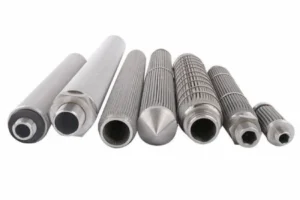
Product List By Layers
What about the Cost of Extruder Screen Filter?

Request a Quote Now!
FAQ on Extruder Filter Layers
Why are multiple-layers better than a single layer?
- Multiple layers utilize a “Coarse-Fine-Coarse” structure. The outer coarse mesh acts as a support, it protects the inner fine filtration layer from collapsing under high melt pressure. This configuration increases the effective filtration area and extends the service life of the extruder screen by up to 50%.
What is the benefit of Sintered Extruder Filter Screens?
Sintered filter screens offer superior structural integrity. Unlike standard welded packs, the layers are permanently bonded through a high-temperature diffusion bonding process. This eliminates the risk of wire migration (loose wires entering the melt) and allows the filter to be ultrasonically cleaned and reused, making it the most cost-effective solution for high-end polymer production.
What is the standard layer sequence for a 3-layer or 5-layer screen pack?
A typical 3-layer pack uses a 20 / 100 / 20 mesh sequence, while a 5-layer pack might use 20 / 60 / 200 / 60 / 20. The principle is symmetry: coarse mesh on the outside for mechanical support, medium mesh as a buffer, and the finest mesh in the center for precision filtration. This protects the delicate fine mesh from being crushed against the breaker plate.
How does layering prevent "Screen Dimpling" or deformation?
“Dimpling” occurs when high pressure forces a single fine mesh into the holes of the breaker plate, it leads to mesh rupture. By adding a heavy-duty support layer (coarse mesh), the pressure load is distributed evenly across the surface. This structural reinforcement ensures the filtration layer maintains its aperture precision even under pressures exceeding 3000 PSI.
Can I combine different materials in a multi-layer pack?
Yes, material hybridizing is common. For instance, many clients use SS 316L for the inner filtration layer to gain superior acid resistance, while using SS 304 for the outer support layers to reduce overall costs. This custom combination provides the necessary chemical protection where it counts most without exceeding the budget.
How do I know when it’s time to upgrade from spot-welded to rimmed packs?
If you are experiencing “Edge Leakage” or bypass—where unfiltered polymer escapes around the sides of the screen—you should upgrade to Rimmed Screen Packs. The aluminum or copper rim acts as a gasket that compresses under heat and pressure, creating a perfect seal in the screen changer that spot-welded packs cannot provide.
Can you provide custom solutions for our extrusion line?
Yes. We can provide the following service for you.
- Custom Layer Sequences: We design bespoke layer combinations (e.g., SS 316L for core filtration with SS 304 for support) to match your specific chemical and pressure requirements.
- Precision Manufacturing: Utilizing advanced spot welding and sintering technologies to ensure zero-defect extrusion filter performance.