
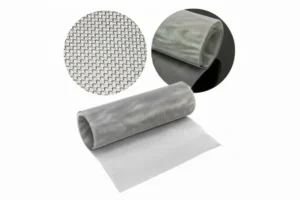

China Custom Extruder Filter Screens by Mesh Size
Quick Answer: Extruder filter mesh sizes range from coarse 20 mesh for primary recycling to ultra-fine 500 mesh for high-precision polymer spinning. The mesh count refers to the number of openings per linear inch, directly determining the micron rating (filtration fineness). Choosing the correct mesh size and wire diameter is critical to balancing melt flow pressure and contaminant removal efficiency.
Detailed Mesh Size Guide & Application Scenarios
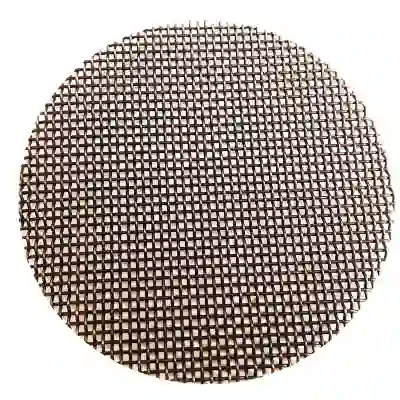
Coarse Mesh Sizes (20 - 60 Mesh)
Technical Detail: These meshes feature larger wire diameters and apertures which can provide maximum structural strength. They are designed to remove large impurities from post-consumer recycled (PCR) resins.
Expert Advice: Best used as the outer layers of a multi-layer screen pack to protect finer inner meshes from high-pressure distortion.
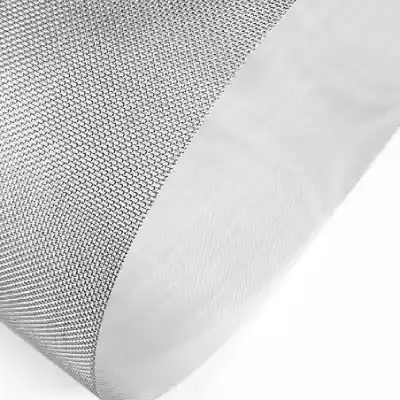
Medium Mesh Sizes (80 - 150 Mesh)
Technical Detail: The most versatile range for standard extrusion. They provide a balanced Pressure Drop (ΔP) while maintaining excellent clarity in the final polymer product.
Expert Advice: Ideal for PVC piping, cable insulation, and standard grade PE/PP pelletizing.
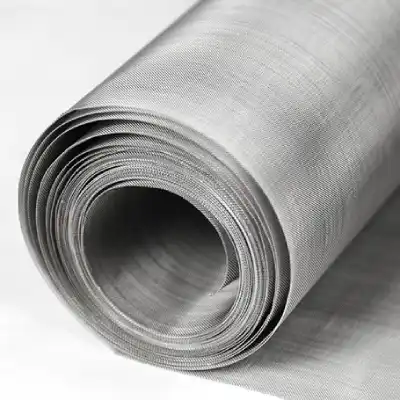
Ultra-Fine Mesh Sizes (200 - 500 Mesh)
Technical Detail: Engineered with ultra-thin wires for high-density weaving. These meshes achieve micron-level filtration necessary for removing microscopic gels and specks.
Expert Advice: Mandatory for BOPP films, medical-grade plastics, and synthetic fiber spinning where surface defects must be near zero.
Common Extruder Screen Mesh Specifications & Applications
| Filtration Grade | Mesh Count Options (SS 304/316L) | Typical Applications & Usage |
|---|---|---|
| Coarse Filtration | 4 mesh stainless steel screen | Recycled plastic granulation |
| 8 mesh stainless steel screen | ||
| 10 mesh stainless steel screen | ||
| 12 mesh stainless steel screen | ||
| 16 mesh stainless steel screen | ||
| 18 mesh stainless steel screen | ||
| Medium Filtration | 20 mesh stainless steel screen | Profile & Pipe extrusion, (PE, PP, PS) |
| 30 mesh stainless steel screen | ||
| 40 mesh stainless steel screen | ||
| 50 mesh stainless steel screen | ||
| 60 mesh stainless steel screen | ||
| 80 mesh stainless steel screen | ||
| Fine Filtration | 100 mesh stainless steel screen | Blown film extrusion |
| 120 mesh stainless steel screen | ||
| 150 mesh stainless steel screen | ||
| 180 mesh stainless steel screen | ||
| 200 mesh stainless steel screen | ||
| Ultra-Fine Filtration | 250 mesh stainless steel screen | Synthetic fiber spinning |
| 300 mesh stainless steel screen | ||
| 400 mesh stainless steel screen | ||
| 500 mesh stainless steel screen |
Mesh Size to Micron Conversion & Technical Specifications
To optimize your melt filtration process, it is essential to match the mesh count with the required particle retention (microns). Coarser meshes provide structural support and pre-filtration, while finer meshes achieve high-purity outputs in blown film and fiber extrusion. Use the professional technical chart below to identify the precise specifications for your production line.
If you do not know you current extruder filter mesh size, pls check our latest technology news to measure this data.
How to Measure Mesh Screen Size: The Ultimate Professional Guide
| US Mesh | Micron (µm) | Inches | Millimeters (mm) |
|---|---|---|---|
| 4 | 4750 | 0.187 | 4.75 |
| 5 | 4000 | 0.157 | 4 |
| 6 | 3350 | 0.132 | 3.35 |
| 7 | 2800 | 0.111 | 2.8 |
| 8 | 2360 | 0.0937 | 2.36 |
| 10 | 2000 | 0.0787 | 2 |
| 12 | 1700 | 0.0661 | 1.7 |
| 14 | 1400 | 0.0555 | 1.4 |
| 16 | 1200 | 0.0473 | 1.2 |
| 18 | 1000 | 0.0394 | 1 |
| 20 | 850 | 0.0331 | 0.85 |
| 24 | 690 | 0.027 | 0.69 |
| 30 | 560 | 0.022 | 0.56 |
| 36 | 485 | 0.019 | 0.485 |
| 40 | 425 | 0.016 | 0.425 |
| 46 | 355 | 0.014 | 0.355 |
| 54 | 305 | 0.012 | 0.305 |
| 60 | 250 | 0.01 | 0.25 |
| 70 | 210 | 0.0083 | 0.21 |
| 80 | 165 | 0.0065 | 0.165 |
| 90 | 145 | 0.0057 | 0.145 |
| 100 | 149 | 0.0059 | 0.149 |
| 120 | 125 | 0.0049 | 0.125 |
| 140 | 105 | 0.0041 | 0.105 |
| 150 | 89 | 0.0035 | 0.089 |
| 170 | 88 | 0.0031 | 0.088 |
| 180 | 76 | 0.003 | 0.076 |
| 200 | 75 | 0.0029 | 0.075 |
| 220 | 63 | 0.0025 | 0.063 |
| 240 | 53 | 0.002 | 0.053 |
| 280 | 44 | 0.0015 | 0.044 |
| 320 | 36 | 0.0012 | 0.036 |
| 400 | 23 | 0.00087 | 0.023 |
| 500 | 19 | 0.00075 | 0.019 |
| 600 | 16 | 0.00063 | 0.016 |
| 800 | 12 | 0.00047 | 0.012 |
| 1000 | 9 | 0.00028 | 0.009 |
| 1200 | 6 | 0.00024 | 0.006 |
Product List By Mesh Size
What about the Cost of Extruder Screen Mesh?

Request a Quote Now!
FAQ on Extruder Filter Mesh Size
How do I choose the right mesh for recycled plastics?
For heavily contaminated recycled material, start with a 20 or 40 mesh. For high-quality pelletizing, a multi-layer pack such as 20/100/20 is highly recommended.
Does a higher mesh count always mean better filtration?
Not necessarily. A mesh that is too fine for the application will cause excessive pressure buildup and frequent screen changes which will increase downtime.
Can you provide custom mesh sizes not listed in the chart?
Yes, we offer custom weaving for specific Aperture and Wire Diameter requirements to meet unique industrial filtration standards.
Are your meshes compliant with FDA and SGS?
Yes, our SS 304 and SS 316L meshes are tested to meet international safety standards for food-grade and medical-grade applications. (Reference: SGS Authority Wiki)
What is the difference between Mesh Count and Micron Rating?
- Mesh count is the number of wires per inch; Micron rating is the actual size of the opening. Two meshes can have the same count but different micron ratings if the wire diameters differ.