

Premium Multi-Layer & 5-Layer Sintered Wire Mesh Sheets
“Looking for a certified industrial partner for high-performance filtration? As a premier ISO-certified factory, we specialize in heavy-duty sintered wire mesh and multi-layer sintered woven wire mesh filter elements. Utilizing state-of-the-art vacuum diffusion bonding technology, our standard 5-layer sintered wire mesh laminates permanently bond stainless steel wire cloth layers to ensure absolute micron ratings (1–200μm) with exceptional mechanical strength under intense pressures. Beyond standard AISI 304, 316, and 316L, we offer advanced custom capabilities in 904L stainless steel and Hastelloy C-22 sintered wire mesh for severe corrosive environments. Contact our engineering team today for a factory-direct sintered wire mesh price list and wholesale quotes.”
Request Pricelist & Specs
What Is Sintered Wire Mesh?
Definition and Core Features:
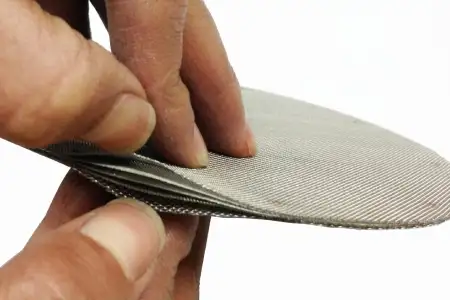
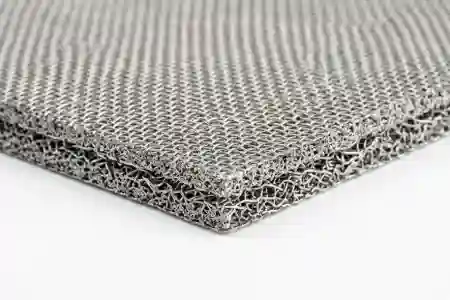
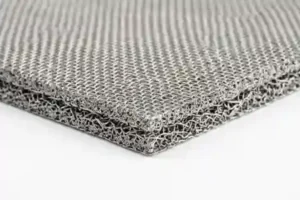
Sintered wire mesh is made by layering multiple woven wire meshes and bonding them through high-temperature (1100–1300°C) sintering, which creates a rigid, durable, and porous metal structure.
Key Structural Characteristics:
- Multi-layer design (typically 5-layer sintered wire mesh)
- High mechanical strength
- Uniform pore size
How Sintered Wire Mesh Improves Performance:
- Eliminates mesh displacement
- Enhances filtration precision
- Improves pressure resistance:
Material Selection for Sintered Wire Mesh:
We have written a detailed post titled “Sintered Mesh Alloy Selection Guide (304 vs 316L vs 904L vs Hastelloy C-22)” to help you better understand.
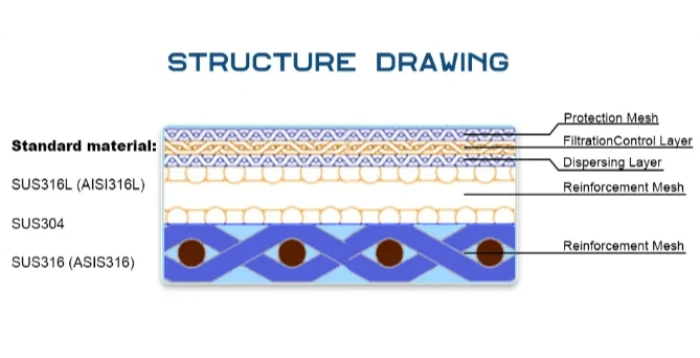
Standard 5-Layer Sintered Wire Mesh Structure
| Layer | Function | Wire Mesh (Standard) | Wire Diameters | Material |
|---|---|---|---|---|
| 1st Layer | Protective Layer | 12-100 Mesh | 0.1mm x 0.1mm | SUS316L |
| 2nd Layer | Precision Control Layer | 5-200 Mesh | -- | SUS316L |
| 3rd Layer | Dispersion Layer | 30-100 Mesh | 0.1mm x 0.1mm | SUS316L |
| 4th-5th Layer | Reinforcement Layer | 12-60 Mesh | 0.4mm x 0.4mm | SUS316L |
Types of Stainless Steel Sintered Wire Mesh?
- Most widely used
- Balancedperformance
- Tailored filtration ratings
- Industry-specific solutions
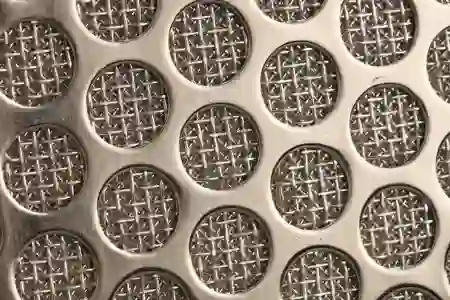
- Extreme structural strength.
- Outstanding integrity
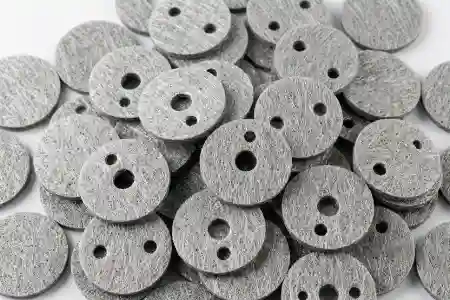
- High porosity & permeability
- Good dirt holding capacity
Sintered Wire Mesh VS. Traditional Woven Wire Mesh:
Although both sintered wire mesh and traditional woven wire mesh serve filtration purposes, their mechanical properties and performance under stress are worlds apart. Traditional woven meshes rely solely on the mechanical interlocking of wires; however, this structure is prone to wire migration and pore enlargement under high pressure.
In contrast, our sintered wire mesh undergoes a high-temperature vacuum diffusion bonding process. This molecular-level fusion creates a “monolithic” structure where every contact point of the wire cloth is permanently welded.
Why Sintered Mesh Wins in Critical Applications:
- Structural Integrity: No more “media migration.” The pore sizes remain fixed and accurate even under extreme hydraulic shock.
- Superior Mechanical Strength: Sintered layers (especially with perforated metal reinforcement) can withstand significantly higher pressure drops without collapsing.
- Enhanced Cleanability: Because the surface is smooth and the wires are fused, particles cannot become trapped between overlapping wires, making ultrasonic cleaning and backwashing 40% more effective.
- Heat & Corrosion Resistance: Our 316L sintered structures maintain their filtration precision in environments reaching up to 600°C (1112°F).
Our Specification of Stainless Steel Sintered Wire Mesh
- Material: Stainless steel 304, 316L, 904L, Hastelloy C-22
- Standard Structure: 5-Layer Sintered Wire Mesh (The industry standard)
- Filtration Rating: 1 micron to 200 microns
- Standard Size: 500x1000mm, 600x1200mm
- Pressure Resistance: Up to 30 MPa
- Porosity: 30%–50%
The standard 5-layer combination (Protective + Filter + Dispersion + 2x Reinforcing) is the industry benchmark for balanced permeability and strength. Pls find our specification of standard 5-layer sintered wire mesh below.
| Micron Rating (μm) | Filter Layer Mesh Count | Permeability (L/min·cm²·kPa) | Thickness (mm) |
|---|---|---|---|
| 1 | 325 x 2300 (Dutch) | 0.8 | 1.7 |
| 5 | 200 x 1400 (Dutch) | 3.5 | 1.7 |
| 10 | 165 x 800 (Dutch) | 8.0 | 1.7 |
| 20 | 165 x 600 (Dutch) | 16.5 | 1.7 |
| 40 | 200 x 200 (Square) | 35.0 | 1.7 |
Sintered Wire Mesh Material Composition (Chemical Content)
| Material Grade | Chromium (Cr) | Nickel (Ni) | Molybdenum (Mo) | Carbon (C) | Key Advantage |
|---|---|---|---|---|---|
| SS 304 | 18% - 20% | 8% - 10.5% | - | ≤ 0.08% | Universal grade, high cost-performance. |
| SS 304L | 18% - 20% | 8% - 12% | - | ≤ 0.03% | Ideal for welded screen packs. |
| SS 316 | 16% - 18% | 10% - 14% | 2% - 3% | ≤ 0.08% | Superior resistance to corrosion & pitting. |
| SS 316L | 16% - 18% | 10% - 14% | 2% - 3% | ≤ 0.03% | Best for high-temp, acidic extrusion. |
| 904L | 19% - 23% | 23% - 28% | 4% - 5% | ≤ 0.02% | Excellent resistance to sulfuric & phosphoric acids. |
| Hastelloy C-22 | 20% - 22.5% | Remainder (Bal.) | 12.5% - 14.5% | ≤ 0.015% | Ultimate protection against severe pitting & oxidizing media. |
Main Application Scenarios & OEM Equipment Compatibility
Sintered wire mesh serves as the universal core element engineered to seamlessly fit and complement global mainstream industrial filtration and extrusion systems:
Polymer Melt & Film Extrusion
- Matched Equipment: Nordson BKG® continuous melt filters, Brückner/Dornier film production lines, Jwell/Batte hydraulic screen changers, MAS CDF disc filter systems.
- Applications: PET/PA/PP spinning, BOPET/BOPP optical film extrusion, plastic recycling pelletizing, and masterbatch filtration. Effectively removes gel and carbon impurities to protect extruders and die heads.
Pressure Leaf Filter Systems
Matched Equipment: IHI CFR series vertical leaf filters, JYBL horizontal disc leaf filters, VPLE sealed filters.
Applications: Chemical resin clarification, dye/coating liquid purification, edible oil decolorization, and pharmaceutical fermentation liquid filtration under high structural pressure.
Gas & Fluid Precision Purification
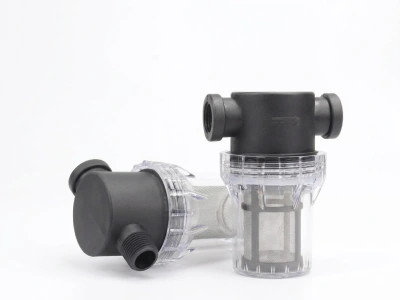
Applications: High-efficiency industrial gas dust removal, compressed air purification, oil-water separation, pipeline fluid filtration, and semiconductor new material purification requiring absolute micron ratings.
Heavy-Duty Hydraulic & Lubrication
Applications: Hydraulic oil and lubricating oil purification, precious catalyst recovery, high-viscosity fluid processing, and high-flow, long-cycle industrial filtration loops.

Key Benefits of Sintered Wire Mesh?
1. Superior Filtration Accuracy
- Micron-level filtration precision, Multi-layer design (typically 5 layers)
- High mechanical strength
- Stable pore distribution
2. High Temperature & Corrosion Resistance
- Suitable for extreme environments, operates up to 600°C+
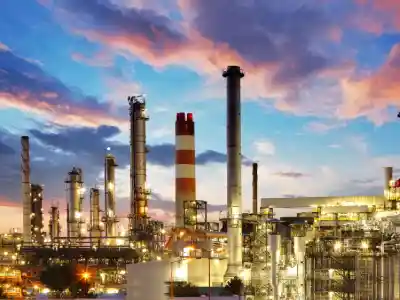
- Works in the chemical and petrochemical industries
3. Long Service Life
- Reusable and cleanable
- Resistant to clogging
4. Cost Efficiency Over Time
- Lower replacement frequency
- Reduced downtime
- Lower long-term cost despite a higher initial price
Strict Quality Control on Plain Weave Sintered Wire Mesh Production
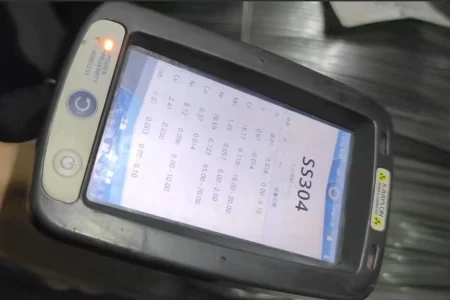
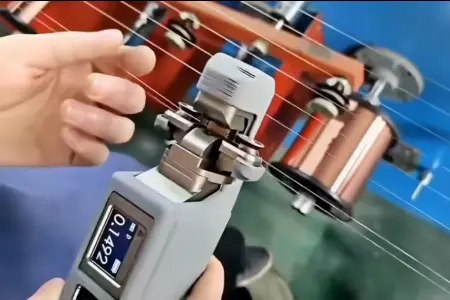
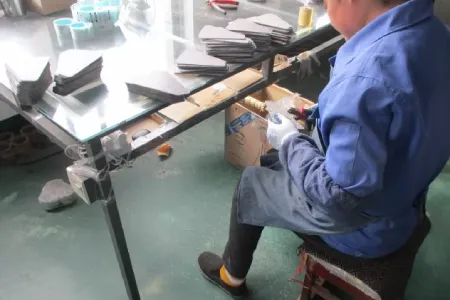
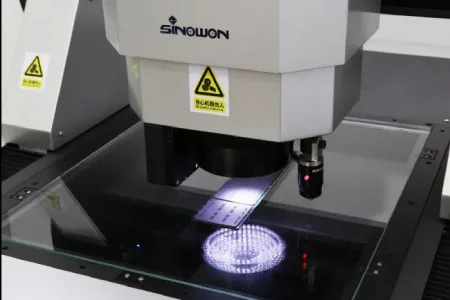
At Xuancheng, we implement strict IQC, IPQC, and OQC protocols based on ISO 9001:2015 & ISO 14001 certification. Our incoming materials undergo raw material code verification, and our finished sintered mesh sheets are subjected to strict bubble point testing and tensile strength tests to ensure maximum structural integrity under pressure.”
Strict IQC Inspection

Strict IPQC & OQC Inspection

FAQ on Sintered Wire Mesh
What is the difference between Sintered Wire Mesh and standard Woven Wire Mesh?
Standard woven mesh is held together by the tension of the weave, which can lead to wire shifting and pore enlargement under high pressure. While sintered wire mesh undergoes a vacuum heat-treatment process that fuses the contact points of all wires. This creates a permanent, rigid structure that maintains its micron rating even under extreme mechanical stress.
Can Sintered Metal Mesh be cleaned and reused?
The answer is Yes. One of the primary advantages of 316L sintered mesh is its exceptional cleanability. It can be restored to near-original performance using:
Backwashing/Backflushing: For liquid filtration systems.
Ultrasonic Cleaning: To remove fine particles lodged deep within the layers.
Chemical/Solvent Cleaning: Since it is highly resistant to corrosion.
Heat Treatment: For organic contaminants.
Which material should I choose: 304 or 316L Stainless Steel?
- 304 Stainless Steel: Suitable for general industrial use where cost-effectiveness is a priority and corrosion risk is low.
316L Stainless Steel: The industry standard for food processing, medical and petrochemical applications. It contains Molybdenum, providing superior resistance to chlorides and acidic environments.
What is the maximum temperature a Sintered Mesh filter can withstand?
Standard stainless steel sintered mesh can operate continuously in temperatures ranging from -200°C to 600°C (-328°F to 1112°F). For higher temperature requirements, special alloys like Inconel, Monel, or Hastelloy can be used to reach up to 900°C.
How do I determine the right Micron Rating for my application?
It depends on the smallest particle size you need to remove. We offer precision ratings from 1 micron up to 200 microns. For high-viscosity fluids (like polymers), a coarser support layer combined with a fine filter layer is recommended to balance flow rate and filtration efficiency.
What Our Global Partners Say
“Precision is everything when it comes to pharmaceutical-grade filtration. The Sintered Wire Mesh provided by Yangzhou Xuancheng met our strict micron rating requirements with impressive consistency. Each sheet arrived perfectly flat and clean, with no manufacturing residue. Their technical team clearly understands the nuances of porous metal media.” —— Technical Procurement Specialist
“We’ve transitioned to this Sintered Wire Mesh for our high-pressure hydraulic filtration units. The 5-layer diffusion-bonded structure is incredibly robust; even under significant pressure fluctuations, the pore size remains stable with zero migration of the wires. It’s a massive upgrade from standard mesh packs that tend to deform or fail prematurely. The permeability is excellent, and the structural integrity during back-flushing has far exceeded our expectations.” —— Senior Filtration Systems Engineer
“Solid, heavy-duty Sintered Wire Mesh. The layers are bonded perfectly, and the tensile strength is exactly what we needed for our polymer melt filtration. Highly recommended for industrial-scale extrusion.” —— Production Supervisor
Top 5-Layer Sintered Wire Mesh Manufacturer | Custom Sintered Metal Filter
ISO-certified factory supplying premium 5-layer sintered wire mesh & woven metal filters. Custom laminates in 316L, 904L & Hastelloy. Get direct factory pricing!
Product SKU: XC-SWM-SERIES
Product Brand: Yangzhou Xuancheng
Product Currency: USD
Product Price: 4.50
Price Valid Until: 2028/12/31
Product In-Stock: InStock
4.9

What about the Cost of Sintered Wire Mesh?