
Sintered Wire Mesh Alloy Selection: 304 vs 316L vs 904L vs Hastelloy C-22
- By Nicoo Tong
- Last Updated: August 18, 2026
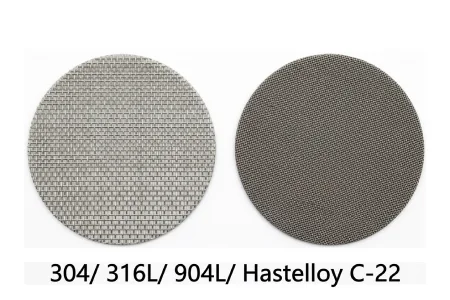
Proper sintered wire mesh alloy selection can prevent premature filter failure and costly operational downtime, especially for 5-layer sintered wire mesh. Match your filtration environment directly to the proper alloy grade:
304 Stainless Steel: Economical choice for standard hydraulic oil, air purification, and food-grade filtration.
316L Stainless Steel: The industry standard for marine, pharmaceutical, and high-purity filter elements with superior chloride resistance.
904L Stainless Steel: Specially engineered for severe acid processing (sulfuric/phosphoric acid) and high-salinity environments.
Hastelloy C-22: Ultimate superalloy for multi-layer sintered wire mesh operating in extreme oxidizing chemicals and temperatures up to 1250°F (677°C).
Sintered Wire Mesh Alloy Selection Description
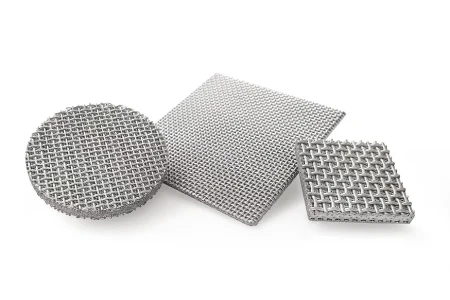
304 Stainless Steel Sintered Wire Mesh
304 stainless steel is the standard baseline material used across industrial filtration. It delivers high mechanical strength and reliable heat resistance for everyday operational environments.
Chemical Composition: ~18% Chromium, 8% Nickel.
Best Applications: Standard hydraulic oil filtration, food and beverage processing, general water purification, and non-corrosive gas filtration.
Key Advantages: Highly cost-effective, easily formable, and suitable for standard 5-layer sintered wire mesh structures operating in non-acidic media.
Limitations: Vulnerable to pitting corrosion and stress corrosion cracking in environments containing chlorides, salts, or strong acids.
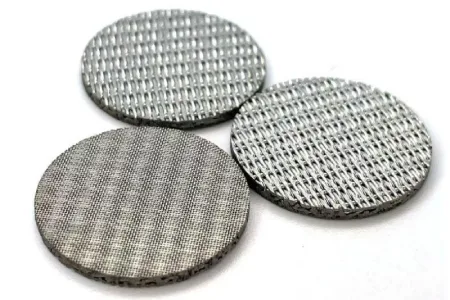
316L Stainless Steel Sintered Wire Mesh
316L is the most widely specified alloy grade for high-performance stainless steel sintered wire mesh. The addition of molybdenum significantly enhances its resistance to localized chemical attacks.
Chemical Composition: ~16–18% Chromium, 10–14% Nickel, 2–3% Molybdenum (Low Carbon ≤0.03%).
Best Applications: Marine filtration systems, pharmaceutical manufacturing, steam sterilization, and petrochemical processing.
Key Advantages: The “L” (low carbon) grade prevents carbide precipitation during high-temperature sintering, maintaining optimal weldability and intergranular corrosion resistance.
Limitations: May experience rapid corrosion under hot concentrated reducing acids (e.g., sulfuric or hydrochloric acid).
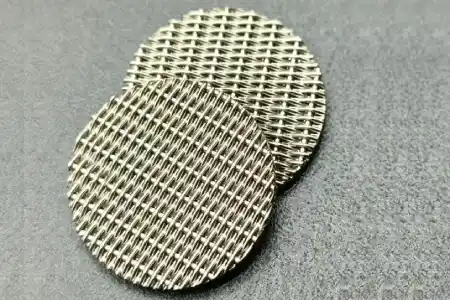
904L Stainless Steel Sintered Wire Mesh
When standard 316L fails in aggressive chemical environments, 904L high-alloy austenitic stainless steel provides the necessary upgrade without requiring superalloy pricing.
Chemical Composition: 19–23% Chromium, 24–28% Nickel, 4–5% Molybdenum, 1–2% Copper.
Best Applications: Sulfuric acid production, fertilizer manufacturing, phosphoric acid processing, and seawater/ballast water management systems.
Key Advantages: High nickel and copper content provides superior resistance to reducing acids. Features a high Pitting Resistance Equivalent Number (PREN ~34 vs 316L’s ~25).
Limitations: Higher raw material cost and reduced mechanical hardness compared to standard 300-series alloys.
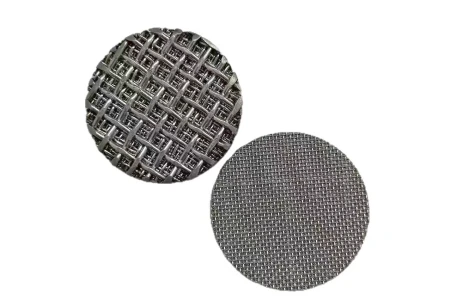
Hastelloy C-22 Sintered Wire Mesh
Hastelloy C-22 (UNS N06022) is a nickel-chromium-molybdenum-tungsten superalloy engineered for extreme chemical severity where stainless steels succumb to rapid degradation.”
Hastelloy C-22 provides exceptional resistance to severe oxidizing environments according to ASTM B575 standards for Nickel-Alloy Plate and Sheet.”
Chemical Composition: ~56% Nickel, 22% Chromium, 13% Molybdenum, 3% Tungsten, 3% Iron.
Best Applications: Flue gas desulfurization (FGD), wet chlorine gas processing, mixed acid processing, and high-temperature waste incineration.
Key Advantages: Exceptional resistance to pitting, crevice corrosion, stress corrosion cracking, and oxidizing/reducing media up to 1250°F (677°C).
Limitations: Premium material cost; reserved for extremely high-risk filtration environments.
Sintered Wire Mesh Alloy Selection Composition (Chemical Content)
| Material Grade | Chromium (Cr) | Nickel (Ni) | Molybdenum (Mo) | Carbon (C) | Key Advantage |
|---|---|---|---|---|---|
| SS 304 | 18% - 20% | 8% - 10.5% | - | ≤ 0.08% | Universal grade, high cost-performance. |
| SS 304L | 18% - 20% | 8% - 12% | - | ≤ 0.03% | Ideal for welded screen packs. |
| SS 316 | 16% - 18% | 10% - 14% | 2% - 3% | ≤ 0.08% | Superior resistance to corrosion & pitting. |
| SS 316L | 16% - 18% | 10% - 14% | 2% - 3% | ≤ 0.03% | Best for high-temp, acidic extrusion. |
| 904L | 19% - 23% | 23% - 28% | 4% - 5% | ≤ 0.02% | Excellent resistance to sulfuric & phosphoric acids. |
| Hastelloy C-22 | 20% - 22.5% | Remainder (Bal.) | 12.5% - 14.5% | ≤ 0.015% | Ultimate protection against severe pitting & oxidizing media. |
Sintered Wire Mesh Alloy Selection Technical Comparison Matrix
| Alloy Grade | Primary Chemical Strengths | Max Operating Temp | Corrosion Resistance | PREN Rating | Target Industry |
|---|---|---|---|---|---|
| 304 | Fresh water, organic solvents, food oils | 480°C / 900°F | Moderate | ~19 | Food, Water, Air Filtration |
| 316L | Chlorides, marine environments, steam | 500°C / 930°F | High | ~25 | Pharma, Marine, Petrochemical |
| 904L | Sulfuric acid, phosphoric acid, seawater | 400°C / 750°F | Very High | ~34 | Chemical Processing, Fertilizer |
| Hastelloy C-22 | Wet chlorine, mixed acids, hot oxidizers | 650°C / 1200°F | Maximum | ~45 | Hazardous Chemical, Waste Incineration |
Decision Flowchart: How to Choose Your Sintered Wire Mesh Material
Step 1: Identify Your Process Parameters
Gather the following operational data before using the selection decision tree:
Medium Chemistry: Specific acids, organic solvents, or gases present in the process stream.
Acid Concentration & pH: Exact acid percentages and working pH ranges.
Chloride Content (Cl⁻): Concentration of chloride ions (measured in ppm).
Operating Temperature: Standard working temperature and thermal cycling spikes.
Batch Cleaning Agents: Chemicals used in CIP (Clean-In-Place) routines (e.g., hypochlorite, chlorine, or nitric acid).
- Chloride Ions >200 ppm: Triggers high risk of stress corrosion cracking and pitting in standard 304.
- Mineral Acids: Requires minimum 904L or Hastelloy C-22.
- Oxidizing Salts & Wet Chlorine / Hypochlorite Cleaning: Excludes all 300-series and 904L stainless steels.
- Temperatures >60°C (140°F) with Chloride Exposure: Accelerates localized pitting corrosion exponentially.
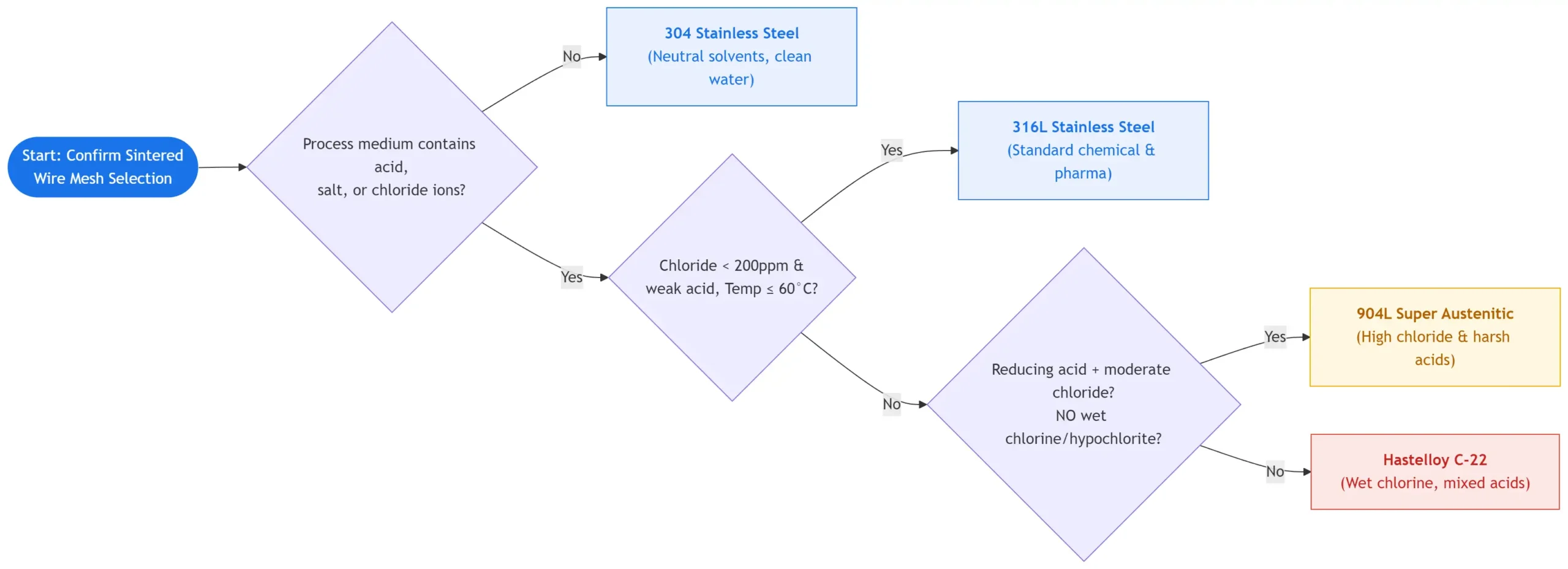
Step 2: Sintered Wire Mesh Alloy Selection Flowchart
Step 3: Sintered Wire Mesh Alloy Selection Rules of Thumb
304 Stainless Steel: Neutral solvents, clean water, non-acidic media, and negligible chloride content (Cl⁻ <50 ppm).
316L Stainless Steel: Weak organic acids, ambient/mild temperatures (≤60°C ), and low chloride exposure (Cl⁻ <200 ppm). Industry standard for pharmaceutical and food-grade processes.
904L Super Austenitic: Concentrated reducing acids (e.g., sulfuric/phosphoric acids) combined with moderate chloride levels, provided no oxidizing halogens or wet chlorine are present.
Hastelloy C-22: High chloride concentration, mixed oxidizing/reducing media, wet chlorine gas, hypochlorite cleaning agents, or highly variable batch chemistry.
The Engineering Decision: Total Cost of Ownership (TCO)
Technical buyers and process engineers understand a fundamental truth in industrial filtration: Initial Purchase Price ≠ True Operating Cost.
Evaluating Sintered Wire Mesh Alloy Selection through a Total Cost of Ownership (TCO) lens reveals how material choice directly impacts your operational risk, maintenance schedules, and long-term ROI.
Total Cost of Ownership (TCO) Matrix by Sinrered Wire Mesh Material Grade
| Operating Scenario | Recommended Material | Risk Level | Upfront CAPEX | Long-Term OPEX | Financial & Business Outcome |
|---|---|---|---|---|---|
| Mild / Neutral Media | 304 / 316L | 🟢 Low | Minimal | 🟢 Very Low | Best Budget Value: Reliable service life with minimal initial investment. |
| Acidic / High Chloride | 316L (Under-specified) | 🔴 High | Minimal | 🔴 Extremely High | Best Budget Value: Reliable service life with minimal initial investment. |
| Strong Acid / Brine | 904L | 🟡 Moderate | Moderate | 🟢 Low | Smart Upgrade: Extended lifecycle, reduced maintenance, balanced CAPEX. |
| Extreme / Mixed Chem | Hastelloy C-22 | 🟢 Zero Risk | High | 🟢 Lowest | Strategic Asset: Guaranteed uptime, near-zero maintenance, massive long-term ROI. |
Engineering Context: In severe chemical environments (such as concentrated sulfuric acid or wet chlorine), standard 304 stainless steel degrades within weeks and is completely unsuitable. However, process engineers frequently make the mistake of selecting 316L as a “budget-friendly” alternative. Comparing 316L vs. Hastelloy C-22 clearly demonstrates the massive financial loss caused by specifying an under-rated alloy in aggressive applications.
Case Study: 5-Year Real Cost Comparison
🔴 Standard 316L Sintered Mesh (Under-specified / High Risk)
- Initial Unit Cost: $500
Expected Lifespan: ~6 months (Rapid pitting and severe acid corrosion)
5-Year Direct Replacement Cost: 10 replacements × $500 = $5,000
Hidden Operational Losses: 10 cycles of unscheduled system downtime, lost production fluids, and emergency labor installation costs
👉 Total 5-Year Expense: >$15,000+
🟢 Hastelloy C-22 Sintered Mesh (Strategic Asset / Zero Downtime)
Initial Unit Cost: $2,500 (5× higher initial CAPEX)
Expected Lifespan: 5+ years of continuous, zero-maintenance operation
5-Year Direct Replacement Cost: $2,500 (Single upfront investment)
Hidden Operational Losses: $0 (Zero unscheduled downtime)
👉 Total 5-Year Expense: $2,500 (Saves up to 80% in total operational cost)
The Bottom Line: A Hastelloy C-22 sintered mesh filter may cost 5 to 10 times more upfront than a standard 316L filter. However, if Hastelloy C-22 provides a 10-year continuous service life while 316L requires replacement every 6 months, Hastelloy C-22 is overwhelmingly the cheaper, smarter investment.
Conclusion: Making the Right Engineering Choice
Right sintered wire mesh alloy selection ultimately comes down to one core principle: Match the material’s corrosion threshold to your medium’s severity without over-specifying or under-protecting.
For standard, non-corrosive processes, stick with 304 or 316L to keep your upfront CAPEX as low as possible.
For severe acidic or extreme chemical media: Upgrade directly to 904L or Hastelloy C-22. While initial purchase costs are higher, the long-term TCO savings and zero-downtime reliability far outweigh the initial investment.
As a specialized stainless steel filter mesh manufacturer since 2007, we engineer custom 5-layer sintered wire mesh based on your micron ratings and structural requirements.

Nicoo Tong
What about the Cost of Sintered Wire Mesh?

Request Quote Now!
FAQ on Sintered Wire Mesh Alloy Selection
What is the main difference between 304 and 316L sintered wire mesh filter elements?
The primary difference is the addition of Molybdenum (2–3%) in 316L stainless steel. Molybdenum significantly improves resistance to pitting corrosion caused by chlorides, salts, and industrial solvents, making 316L preferred for marine and pharmaceutical applications.
Why choose a 5-layer sintered wire mesh structure?
A 5-layer sintered wire mesh combines a protective layer, control layer, dispersion layer, and two heavy support layers. Sintering these layers together provides structural rigidity, high mechanical strength, and precise pore distribution that simple woven mesh cannot maintain under high pressure.
When should I upgrade from 316L to 904L or Hastelloy C-22?
You should upgrade to 904L if your process involves concentrated reducing acids (like sulfuric acid) or high-salinity seawater. Upgrade to Hastelloy C-22 if your filtration system encounters wet chlorine gas, mixed oxidizing/reducing acids, or temperatures exceeding 1000°F (538°C).
Can sintered wire mesh filter elements be cleaned and reused?
Yes, sintered wire mesh filters are fully cleanable and reusable. Thanks to the solid diffusion-bonding process, the wires will not shift or unravel during aggressive cleaning methods such as ultrasonic bath treatment, high-pressure backflushing, chemical solvent immersion, or thermal burn-off furnaces.
How does sintering prevent pore migration under high pressure?
Standard woven wire mesh can experience wire movement and pore enlargement under high differential pressure, leading to media migration. Sintering thermally fuses all wire contact points into a unified metallic lattice, permanently locking the precise pore rating in place even under hydraulic pressure spikes up to 30 MPa (4350 PSI).