
Extruder Screen Pack Selection Guide for Polymer Processing: Pressure, Temperature, and Contaminant Control
- By Nicoo Tong
- Last Updated: August 16, 2026
Executive Summary / Quick Decision Matrix
Matching an extruder screen pack selection to your polymer processing line requires balancing melt pressure (ΔP), thermal/viscosity characteristics, and contaminant loading:
Low-to-Medium Pressure (50–150 bar | PE, PP Film & Pipe): Use 3-layer spot-welded screen packs (e.g., 20/60/20 mesh) in SS304 to maintain flow rate while capturing particulate matter.
High-Pressure & High-Precision (200–350+ bar | PET, Nylon, Spunbond): Use 5-layer sintered mesh packs or rimmed discs (e.g., 20/80/250/80/20 mesh) in SS316L to eliminate gel passage and prevent mesh migration under extreme shear.
Recycled Polymers (PCR/PIR Granulation): Utilize heavy-duty aluminum-rimmed packs or continuous Reverse Dutch Weave belts (72/15 or 132/17) designed for rapid pressure buildup and high mechanical loads.
1. Melt Pressure Dynamics: How Pressure Dictates Screen Pack Structure
In polymer extrusion, a screen pack does not merely strain foreign particles—it acts as a dynamic restriction device that generates back pressure. This back pressure homogenizes the polymer melt, eliminates air pockets, and improves temperature distribution before the melt enters the die.
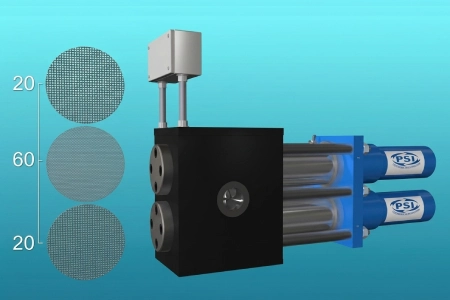
The visual on the left illustrates a classic 20/60/20 screen pack configuration. This multi-layer structure is essential because the high melt pressure required for homogenization can compromise a single, fine-mesh screen. The two 20-mesh coarse screens serve as outer support and pre-filtration layers, protecting the fragile 60-mesh fine screen, which performs the critical gel and fine-particle filtration. A robust construction like this, managed by the PSI hydraulic screen changer, ensures optimal back pressure without screen failure.
1.1 Low-to-Medium Pressure Extrusion (50–150 bar / 700–2100 psi)
In standard polyolefin processing (such as blown film, LDPE/LLDPE, or profile extrusion), operating melt pressures remain moderate (50–150 bar).
Pack Architecture: Typically utilizes a 3-layer symmetrical layout, such as 20 / 60 / 20 mesh or 30 / 100 / 30 mesh.
Mechanical Dynamics: The primary goal is maintaining consistent flow without inducing excessive pressure drop across the breaker plate.
Layer Function: The outer coarse mesh (20 mesh) acts as a pre-filter for large contaminants and provides mechanical rigidity, protecting the finer inner layer from tearing.
1.2 High-Pressure & High-Shear Processing (200–350+ bar / 3000–5000+ psi)
High-performance engineering polymers (e.g., PET, Nylon, PEEK) and ultra-fine fiber lines operate under high pressures exceeding 200–350 bar. Under extreme pressure differential (ΔP), standard woven wires can shift, stretch, or burst into the breaker plate holes (a failure known as mesh migration or screen blowout).
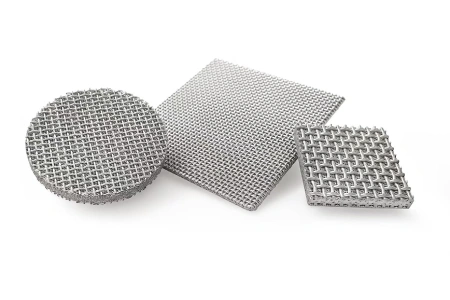
Pack Architecture: Requires 5-layer progressive screen packs (e.g., 20 / 80 / 250 / 80 / 20 mesh) or diffusion-bonded sintered wire mesh packs.
Mechanical Dynamics: Fine mesh wires (such as 250 mesh with wire diameters under 40 microns) cannot withstand 200+ bar differential pressure independently. They must be sandwiched between intermediate support layers (80 mesh) and heavy backing layers (20 mesh coarse wire) to distribute structural loads evenly across the breaker plate openings.
1.3 The Role of Breaker Plates in Back Pressure Generation
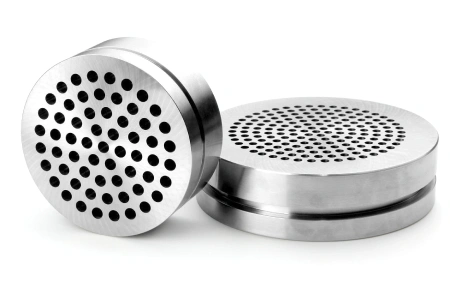
The breaker plate converts the rotational polymer flow from the extruder screw into a linear, streamlined melt flow while providing structural backing for the screen pack.
Pressure Drop Control: The percentage of open area on the breaker plate, combined with the mesh density of the screen pack, directly dictates head pressure.
Melt Homogenization: Increasing back pressure through denser screen pack combinations enhances shear mixing in the barrel, which is critical for color masterbatch dispersion and eliminating thermal striations in the final extrudate.
2. Resin-Specific Extruder Screen Pack Selection: Matching Mesh to Polymers
Different polymer families exhibit distinct melt viscosities, thermal degradation thresholds, and contaminant profiles. Selecting the incorrect wire alloy or weave density can cause polymer degradation, gel formation, or premature line shutdown.
| Polymer Family | Processing Characteristics & Challenges | Recommended Screen Pack Structure | Optimal Alloy |
|---|---|---|---|
| Commodity Polyolefins (HDPE, LDPE, PP) | Moderate viscosity; contaminants consist mainly of un-melted pellets and dirt particles. | 3-Layer or 4-Layer Spot-Welded Packs (20 / 40 / 80 / 20 Mesh) | Stainless Steel 304 |
| Engineering Plastics & Fibers (PET, PA6/66, PBT) | Low melt viscosity; highly prone to gel formation and micro-particulates; high temperature. | 5-Layer Sintered Packs or Rimmed Discs (20 / 100 / 325 / 100 / 20 Mesh) | Stainless Steel 316L |
| Thermal & Corrosive Resins (PVC, Fluoropolymers) | Highly heat-sensitive; degrades into HCl gas at elevated temperatures; low-shear required | Coarse Multi-Layer Gradient Packs (20 / 40 / 20 Mesh (Low ΔP)) | SS316L / Monel 400 |
| Recycled Plastics (PCR / PIR Granulation) | Severe contamination (paper, aluminum foil, cross-linked gels); extreme ΔP spikes | Heavy-Duty Rimmed Discs / Continuous Belts (20 / 60 / 20 Mesh or 132/17 Reverse Dutch) | SS304 (High Tensile) |
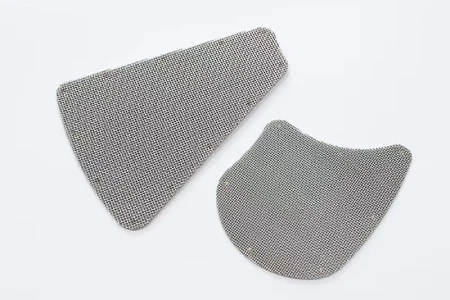
2.1 Commodity Polyolefins (HDPE, LDPE, PP)
Standard polyolefins are thermally stable and forgiving. A cost-effective SS304 spot-welded screen pack with a basic coarse-fine-coarse construction balances filtration efficiency and operational lifespan.
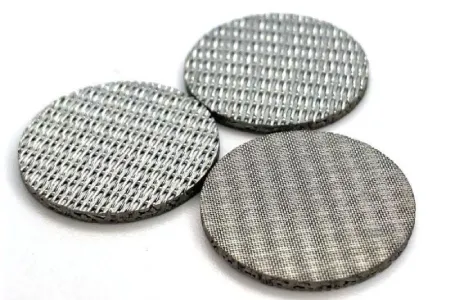
2.2 Engineering Plastics & Synthetic Fibers (PET, PA Nylon)
Polyolefins accept basic straining, but virgin PET and Polyamide resins require depth-style fine filtration. Low-viscosity PET melt can bypass poorly sealed screen edges. Furthermore, soft organic gels can shear through standard square mesh openings under pressure.
Using SS316L Dutch Weave mesh or 5-layer sintered wire mesh provides tortuous path filtration, trapping deformable gels within the wire matrix.
2.3 Thermal & Corrosive-Sensitive Resins (PVC, Fluoropolymers)
PVC thermal degradation releases hydrochloric acid (HCl) gas, which rapidly pits standard SS304 mesh.
Low Hold-up Volume: Screen packs must maintain a low pressure drop (ΔP) to prevent melt stagnation and burning inside the barrel.
Corrosion Resistance: SS316L or Nickel-copper alloys (Monel 400) are required to resist chemical attack during continuous operation.
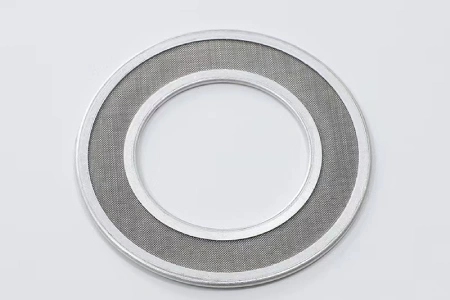
2.4 Post-Consumer Recycled Plastics (PCR / PIR Granulation)
Recycling extruders process heavy dirt loads. Standard spot-welded packs quickly blind or delaminate.
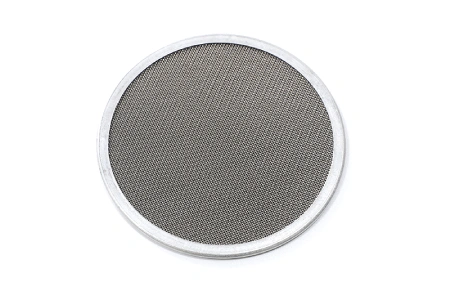
Reinforced Edges: Aluminum or stainless steel rimmed (framed) packs prevent polymer bypass around the edges of high-capacity auto-pack changers.
Continuous Belts: For automated continuous screen changers, heavy-duty Reverse Dutch Weave mesh belts (
72/15or132/17) provide high warp-wire tensile strength to endure continuous indexing pulling forces.
3. OEM Extruder Screen Pack Selection & Machinery Compatibility
Different OEM extrusion systems feature proprietary screen changer geometries, sealing mechanisms, and pressure limits.
Twin-Screw Compounding
Coperion ZSK/ Leistritz ZSE/ KraussMaffei
✓ Spot Welded Packs
✓ 5-Layer Sintered Wire Mesh
Recycling Systems
EREMA/ Starlinger/ NGR
✓ Rimmed Discs (Aluminum/SS)
✓ Reverse Dutch Belt
Blown & Cast Film
Reifenhäuser/ Hosokawa Alpine
✓ Precision Circular Discs
✓ Ultra-Fine Mesh(250+)
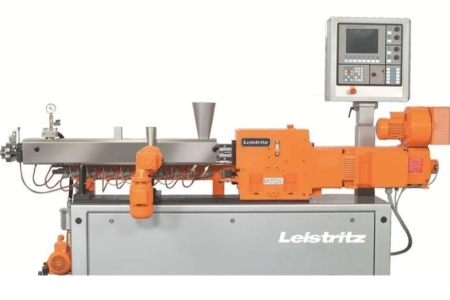
3.1 Twin-Screw Compounding Extruders (Coperion ZSK, Leistritz ZSE, KraussMaffei)
Application: High-output compounding, masterbatch production, and engineering plastic modification.
Screen Pack Requirement: High-strength 4-layer or 5-layer spot-welded circular packs. High-density spot welds prevent layer separation during rapid hydraulic slide-plate index changes.
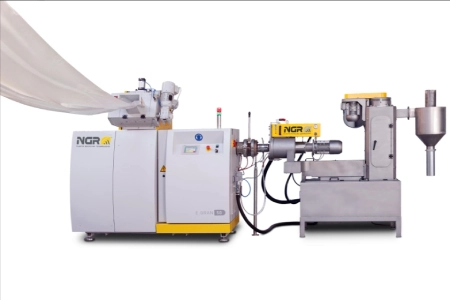
3.2 Recycling & Granulation Systems (EREMA INTAREMA, Starlinger, NGR)
- Application: Post-consumer film recycling, bottle flake pelletizing, and edge trim recovery.
- Screen Pack Requirement: Aluminum/SS Frame Rimmed Discs (for piston/slide-plate changers) or Reverse Dutch Weave Mesh Belts (for continuous belt changers). Metal rims form an engineered seal against the changer cavity, preventing melt leakage under high contamination loads.
Screen Pack Requirement: High-strength 4-layer or 5-layer spot-welded circular packs. High-density spot welds prevent layer separation during rapid hydraulic slide-plate index changes.
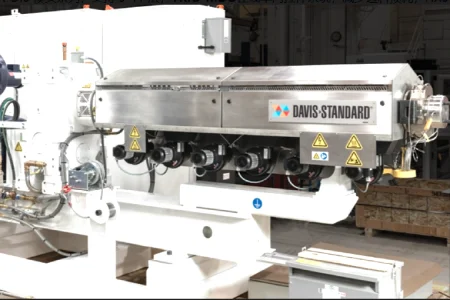
3.3 Blown & Cast Film Lines (Reifenhäuser, Hosokawa Alpine, Davis-Standard)
- Application: Optical-grade packaging films, barrier films, and medical-grade sheeting.
- Screen Pack Requirement: Ultra-clean, burr-free circular discs with strict outer diameter tolerances (±0.1mm). Wire mesh must undergo ultrasonic cleaning before assembly to eliminate drawing lubricants that cause film pinholes or bubbles.
- Screen Pack Requirement: High-strength 4-layer or 5-layer spot-welded circular packs. High-density spot welds prevent layer separation during rapid hydraulic slide-plate index changes.
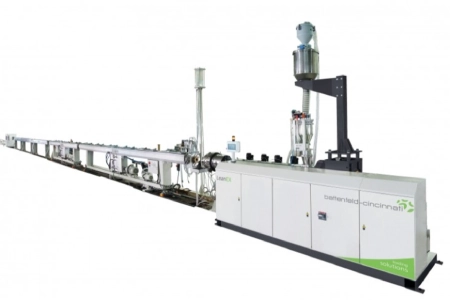
3.4 Pipe, Sheet & Profile Lines (Battenfeld-Cincinnati, Weber)
- Application: PVC pipe extrusion, HDPE conduit, and structural sheet processing.
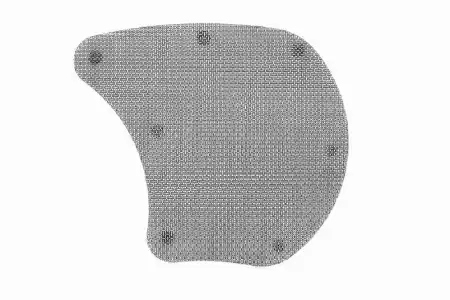
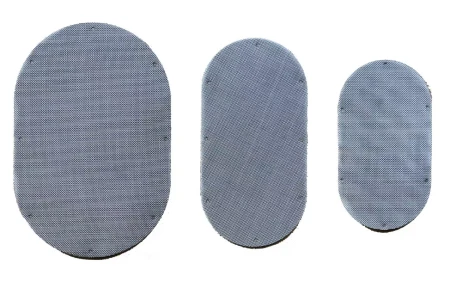
- Screen Pack Requirement: Custom geometric shapes, including kidney-shaped, oval, or rectangular screen packs,s engineered specifically for specialized breaker plate cavities.
4. Polymer Processing Troubleshooting: Preventing Filtration Failures
4.1 Solution for Screen Blowout & Mesh Migration Under High ΔP
Problem: Fine mesh ruptures or pushes through the breaker plate holes, allowing unfiltered melt and wire fragments into the die.
Root Cause: Excessive differential pressure (ΔP) combined with insufficient backing support.
4.2 Eliminating Gel Contamination & Unmelted Polymer Specks
Problem: Soft polymer gels deform under pressure and squeeze through standard square mesh openings, appearing as optical defects in blown film or sheet products.
Root Cause: Square mesh (Plain Weave) lacks depth filtration; it only screens in two dimensions.
Solution: Replace plain weave square mesh with Plain Dutch Weave (e.g.,
24/110or30/150 mesh) or Twill Dutch Weave. The overlapping weave creates a three-dimensional tortuous path that captures gel structures through depth filtration.
4.3 Mitigating Polymer Degradation Caused by Excessive Shear Heat
Problem: Polymer melt temperature spikes downstream of the screen changer, causing material yellowing or thermal degradation.
Root Cause: Too tight a filtration layer jumps the pressure drop (ΔP) abruptly, converting mechanical drive energy into localized shear heat.
Solution: Transition to a gradual density pack gradient (e.g., change from a restrictive
20 / 200 / 20 meshto a smoother gradient of20 / 60 / 100 / 200 / 40 / 20 mesh). This distributes particulate capture across multiple depth stages rather than choking the primary filter face.
Conclusion: Balancing Filtration Efficiency and Operational ROI
Selecting the optimal extruder screen pack is ultimately an exercise in balancing filtration precision with production uptime. Overspecifying mesh density creates unnecessary backpressure and forces frequent screen changes, while underspecifying risks gel passage, die contamination, and costly line shutdowns.
Key Engineering Takeaways for Buyers & Engineers:
Match Structure to Melt Pressure (ΔP): Use standard 3-layer spot-welded packs for low-pressure polyolefin processing, but upgrade to 5-layer diffusion-bonded sintered packs when operating above 200 bar to prevent mesh migration.
Select Alloys for Operating Environment: Standard SS304 keeps initial CAPEX low for general polyolefins. Upgrade to SS316L for high-temperature engineering resins (PET/Nylon) to resist thermal oxidation and degradation.
Eliminate Bypass with Engineered Borders: For high-pressure hydraulic screen changers and heavy PCR recycling lines, utilize aluminum or stainless steel rimmed packs to create a positive mechanical seal and prevent polymer leakage.

Nicoo Tong
What about the Cost of Extruder Screen Pack Selection?
As a specialized manufacturer, Yangzhou Xuancheng Filter Screen Co., Ltd. custom-engineers multi-layer spot-welded, rimmed, and sintered screen packs tailored to your specific OEM breaker plate dimensions and resin characteristics based on ISO9001 QMS.
Need Custom Extruder Screen Packs for Your Processing Line? Yangzhou Xuancheng provides precision-stamped screen packs, custom aluminum-rimmed filter discs, and 5-layer sintered mesh packs engineered to your exact OEM drawings and mesh specifications.

Request Quote Now!
FAQ on Extruder Screen Pack Selection
How often should an extruder screen pack be changed?
Screen pack change frequency is governed by differential pressure threshold (ΔP) rather than fixed time intervals.
Manual / Slide-Plate Changers: Change the pack when head pressure rises 30%–50% above clean baseline pressure (or reaches the OEM’s max pressure limit, typically 200–250 bar). Automated Continuous Changers: Index the filter mesh belt continuously or automatically based on pressure transducer setpoints (e.g., maintaining pressure stability within ±5 bar).
What is the difference between spot welded and rimmed screen packs?
The choice between spot welded and rimmed packs depends on sealing requirements and operating pressure.
Spot Welded Packs: Multiple wire mesh layers bound together by precise electrical spot welds around the perimeter. Cost-effective and ideal for standard circular breaker plates. Rimmed (Framed) Packs: Mesh layers compressed within a soft metal border (Aluminum, Copper, or Stainless Steel). The rim acts as a gasket, offering superior edge-sealing to prevent melt bypass in high-pressure hydraulic changers.
Why is SS316L preferred over SS304 for PET and Nylon processing?
SS316L provides superior thermal stability and corrosion resistance required for high-temperature engineering polymers.
Temperature & Oxidation: While SS304 works for polyolefins below 260°C, PET and PA66 run at 280°C–320°C where SS304 suffers thermal oxidation. Corrosion Resistance: SS316L contains 2%–3% Molybdenum, delivering exceptional creep rupture strength and protection against corrosive degradation byproducts.
How do I convert mesh count to micron rating when selecting an extruder screen?
Mesh count measures openings per linear inch, while micron rating (µm) defines actual pore size. Because wire diameter affects open area, they do not convert linearly.
Coarse Pre-filtration (20–40 Mesh): ~840 µm to 400 µm (captures large un-melts, wood fibers, and metal particles). Medium Processing (60–100 Mesh): ~250 µm to 150 µm (standard for polyolefin film, sheet, and pipe). Fine Precision (150–325 Mesh): ~100 µm to 44 µm (essential for blown film, spunbond non-woven, and optical-grade PET).
When should I upgrade from standard spot-welded packs to sintered mesh packs?
Sintered (diffusion-bonded) packs are required when operating conditions exceed the structural limits of standard spot welds.
High Pressure Differential (ΔP > 200 bar): Prevents spot weld shear, layer sliding, and screen blowout into breaker plate holes. Ultra-Fine Filtration (<50 Micron): Molecular-level diffusion bonding fuses wire intersections, preventing pore distortion under high melt shear. Backwashing & Continuous Lines: Withstands repeated high-pressure hydraulic backwash cycles without layer separation or edge fraying.